
The evolution of astrology has always been inextricably linked to technological advancement. From the construction of ancient stone circles to the development of complex astronomical tables, practitioners have consistently sought more precise tools to map the movements of the heavens.
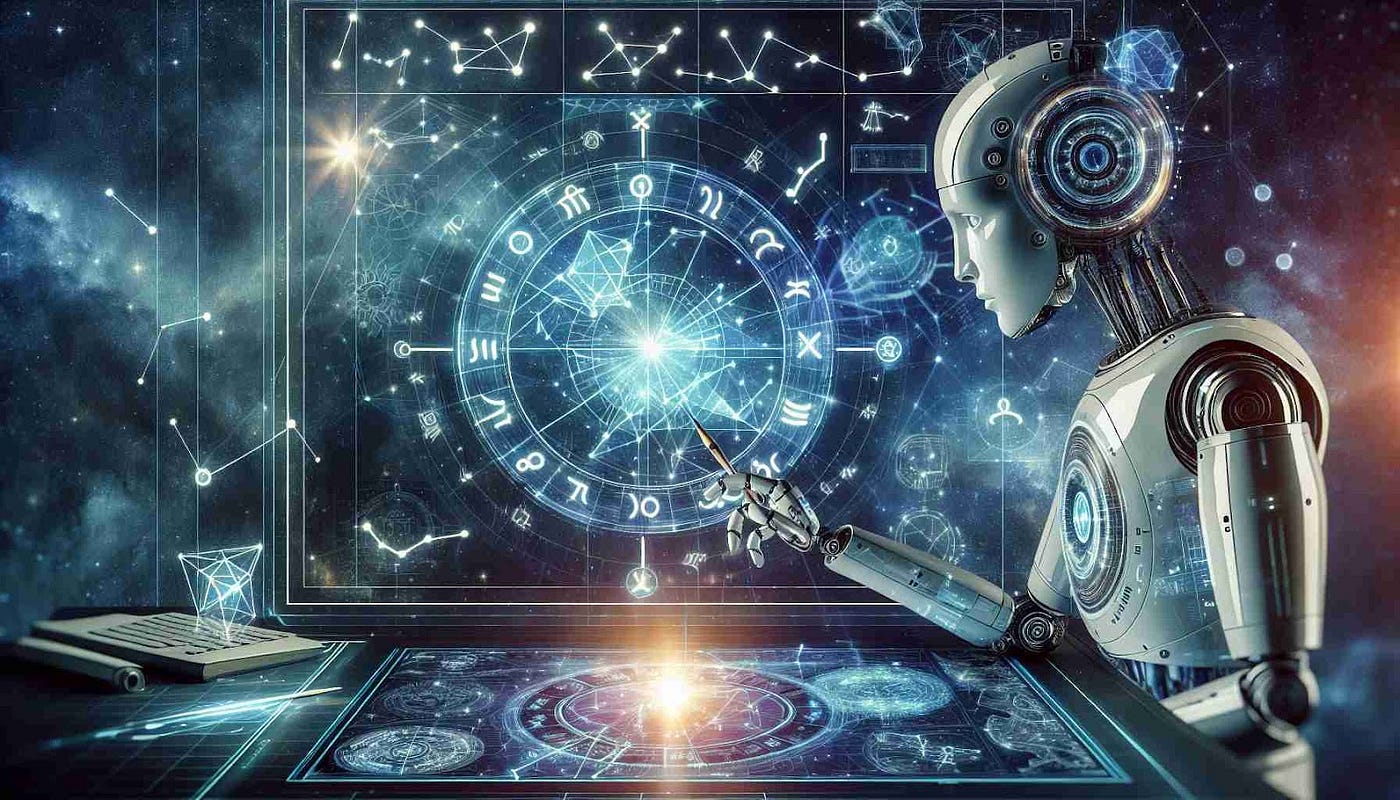
Today, we stand at a new frontier where artificial intelligence is beginning to reshape the landscape of celestial interpretation. This digital shift offers unprecedented speed in calculating planetary alignments, but it also raises profound questions about the essence of spiritual guidance and the irreplaceable role of human intuition in a data-driven world.
Artificial intelligence excels at the quantitative aspects of astrology. By processing millions of historical data points and celestial cycles in milliseconds, AI can generate intricate birth charts and forecast transits with a speed that no human could ever match. This capability allows for a much higher degree of technical personalization in digital horoscopes, moving beyond generic sun-sign predictions to include the more nuanced aspects of an individual’s unique cosmic signature.
For the modern astrologer, these tools serve as a powerful administrative assistant, freeing them from the labor-intensive mechanics of calculation and allowing them to focus on the more profound work of symbolic interpretation.
However, the astrological community remains rightfully cautious about the limitations of machine learning. Astrology is far more than a set of mathematical coordinates; it is a symbolic language that requires empathy, psychological depth, and a connection to the human condition. While an algorithm can identify a Saturn return or a specific planetary square, it cannot truly grasp the weight of responsibility or the existential nuance that accompanies these shifts.
The subtle art of a live consultation where an astrologer reads between the lines of a client’s life story remains a uniquely human endeavor. AI lacks the capacity for genuine spiritual insight and the creative synthesis required to turn a list of planetary positions into a meaningful life narrative.
The future of the craft likely lies in a harmonious synthesis rather than a total digital takeover. As artificial intelligence continues to refine its predictive capabilities, it will likely become an indispensable resource for research and pattern recognition within the field.
Yet, the heart of astrology will always reside in the sacred exchange between the practitioner and the seeker. By viewing AI as a sophisticated lens rather than the eye itself, the astrological world can embrace the digital age without losing the ancient soul that makes the practice so transformative.