

We’ve all heard it before: “He’s a natural-born leader,” or “She’s just sensitive by nature.” While it’s tempting to view our personalities as a gift wrap we were handed in the delivery room, the science of who we are tells a much more dynamic story.
The truth? Your personality isn’t a fixed inheritance; it’s a living reflection of the world you navigate every day.

The Architecture of “You”
Think of your genetics as the foundation of a house. It dictates the footprint and the structural limits. However, the environment is the architect, the interior designer, and the constant renovations that happen over a lifetime.
While we might be born with a certain temperament (our baseline level of reactivity), our personality—the complex web of how we think, feel, and behave—is forged in the fires of experience.
1. The Power of “Closed Things” (Your Inner Circle)
The people you hold closest are the primary sculptors of your character. This “closed environment” acts as a mirror and a mold:
- Family Dynamics: Our earliest interactions teach us how to trust, how to argue, and how to seek affection. These aren’t “born” traits; they are learned survival and connection strategies.
- The “Five People” Rule: There is a popular theory that we are the average of the five people we spend the most time with. Their habits, vocabularies, and attitudes seep into our subconscious, slowly shifting our own personality traits.
- Cultural Osmosis: The unspoken rules of your community—whether it values rugged individualism or collective harmony—shape your moral compass and social persona more than any DNA strand could.
2. The Environment as a Catalyst
Your physical and social surroundings act as a constant feedback loop.
“We change our tools, and then our tools change us.” — Marshall McLuhan
If you live in a high-stress, competitive city, you may develop a “Type A” personality characterized by urgency and ambition. Conversely, someone with the same genetic makeup living in a quiet, communal rural setting might manifest as relaxed and patient. The environment doesn’t just influence us; it demands certain traits for us to thrive.
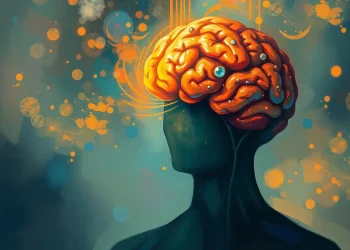
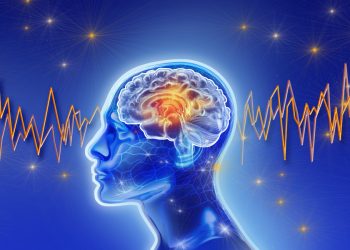
3. Neuroplasticity: The Brain’s Open Door
The most exciting part of this reality is neuroplasticity. Because personality is largely shaped by environment and habit, it is not a life sentence.
When you change your “closed things”—your job, your circle of friends, or your daily habits—your brain physically rewires itself. We see this in people who travel long-term or undergo major life shifts; they often return as “different people.” They haven’t changed their DNA; they’ve simply given their personality a new classroom.
If personality were a birth gift, we would be static creatures, unable to grow or adapt. Realizing that you are a product of your environment is actually the ultimate form of empowerment. It means that by curating your surroundings and choosing your “closed things” wisely, you have the power to edit who you are becoming.
You aren’t just born; you are built.